 My latest food experiment was without a doubt my most challenging. In solidarity with a vegan client and friend of mine, Anthony of ManVsClock, I decided to try veganism for 4 weeks.
My entering into this experiment followed weeks of debate with Anthony on the ethical and health implications of such a diet. I figured the best way to have a valid opinion about it would be to try it out myself.
His love of animals had made it hard for him to justify the consumption of animal products but he was unsure of the impact that a vegan diet would have on his health and body composition.
Like most aspects of nutrition, there is not much conclusive evidence and a lot of contradictory research, articles and propaganda on both sides of the debate.
To make things more complicated and confusing, discussing the consumption of animal products is often as highly charged and emotional as talking about politics or religion. This can often cloud judgement when looking at the nutritional and health aspects of abstaining from meat, fish and dairy.
The 4 week experiment
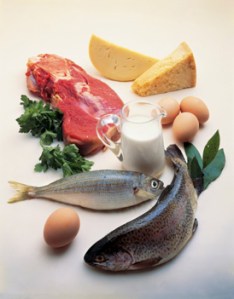
Some of the off-limit foods for the month
A clarification of the 4-week vegan experiment rules: for 28 days I would consume no food that contained meat, dairy, eggs or any of their derivatives. This is in stark contrast to my current diet which I would largely describe as ‘paleo‘ – meat, vegetables, eggs, fruit, nuts, seeds and no grains, processed food, additives or sugar.
To suddenly make such a big dietary change was always going to be tough and a difficult adjustment but I welcomed the challenge and another chance to learn something about myself.
Vegan Vs Paleo
The first thing I’d like to consider are the similarities between paleo and vegan, two approaches that on the surface look at the opposite ends of the nutritional spectrum. Firstly, both sides make up a large part of their diet from fruit and vegetables. Nuts also play a part – a few scoops of almond butter would equally appeal to both camps.
Also, people who champion both approaches are generally more health conscious than your average person. Many search for organic produce where possible and limit processed food.
However, people often associate veganism or vegetarianism with automatically being healthy. This is far from the case – it’s very possible to be obese on these diets and a lot of veggie or vegan packaged foods are no better for you than other kinds of processed junk.
Now onto the big difference – vegetarians consume no meat and vegans abstain from any product, food or otherwise, derived from animals. People following the paleo diet will consume animal products freely and often in abundance.
The average diet in the west is, to be frank, garbage. A reliance on processed and fast ‘food’ and a lack of real, nutrient rich food has left a lot of people big and sick. Compared to this, a healthy vegan diet or strict paleo will often leave you feeling great and improve all your health markers. Therefore, many people champion both approaches as they’ve had good results from them.
However, simply cutting out the junk could be the reason for the improvement that these people experience. What I’m more interested in is what is the healthiest approach long term.

Foods that both the paleo and vegan communities would embrace
Onto my month of meat eating abstinence. My biggest take home was that veganism is damn hard! Every time I looked at a food product I found myself mentally breaking it down to try and work out if I could eat it. Most of the time, I couldn’t. Rather than perusing a menu for tasty things to eat, I would just desperately look for something I could eat. Usually, it would be something like a salad, but only if they left out the cheese.
Put another way, it pretty much took all the fun out of eating out. Cooking at home was smoother and more enjoyable as it’s easy to control the process and the ingredients.
Social situations
Socially it can be difficult and awkward. People often give you a look when you tell them you’re vegan and I sometimes found myself explaining to people that it was just an experiment. People often unfairly associate veganism with being a tree hugging Greenpeace activist and I was keen to distance myself from this. I freely admit that it’s pretty pathetic of me to feel I had to do explain myself in this way, but this is how I felt.
Other social situations can be difficult – for example, when grandma bakes me some fresh chocolate chip cookies or a friend makes a meal with meats or eggs. Sadly, as a vegan in these situations you’ll often be met with bemusement, annoyance or even ridicule.
Social situations and convenience aside, how did a vegan diet make me feel physically?
Despite ensuring I ate as healthily as possible, overall I suffered from a lack of energy which was reflected in my poor training sessions and a general feeling of lethargy. It also appeared to affect my mood and I found myself feeling a bit down generally, which isn’t like me. As I always say with these experiments, other factors could have caused these things, but I didn’t feel light and ‘alive and kicking’ like some vegans I spoke to said I would.
However, there were some results that were not anecdotal. In wanting to keep this experiment as scientific as possible, I also recorded my intake of food and my weight at regular intervals. Despite consuming as many calories as normal, I dropped 3.1kg to finish my vegan month at 77.4kg. This is probably my lowest weight since I was about 16 years old. From a weight loss perspective that might sound great, but based on how I looked I am sure that along with losing some fat, a large portion of that 3.1kg drop was muscle. Without sophisticated tools I cannot know for sure.
People commented that I looked ‘thin’ and ‘gaunt’, which is not a look I’m striving for. Coupled with low energy levels, this is concerning and I’m not sure where I would be after, say, 6 months of veganism. I weight train and am active and should not be dropping weight that quickly with my frame and body type.
What caused this? I believe low protein consumption could have played a part. I took some additional vegan protein supplementation occasionally, but I am open to the suggestion that I could have done more to up my protein levels. However, I don’t believe in relying on supplements and feel that a diet which naturally promotes higher protein and fat and lower carbs is right for me.
A vegan diet naturally promotes a macro-nutrient profile of high carb, low fat and low protein that is simply wrong for many people. Add nutrient shortcomings such as omega-3s, zinc, vitamin D, dietary cholesterol and vitamin B12 (the granddaddy of vegan nutrient deficiencies), and you have a way of eating that could be a disaster for some people. These are some of the nutrients that are difficult to find outside of animal products, and supplements often don’t cut it as they often aren’t absorbed by the body as effectively.
It takes a big effort to make up for those fore-mentioned shortcomings, and it’s misguided to think that just cutting out animal products will lead you on a path to great health.
If you’re considering going vegan, check out this post written by a vegan Registered Dietician on ways to help make up for nutritional shortfalls on a vegan diet.
I respect that many people will be vegan for ethical reasons and in that case I’d say make sure you research what nutrients you may be lacking and adjust your diet and supplementation accordingly. Listen to your body and consider how you stand ethically on all parts of a vegan diet – is factory farmed meat the same as pasture raised grass-fed beef? Is a factory farm egg the same as a free range organic egg? Is wild caught fish the same as farmed? If you may be lacking something nutritionally consider a compromise somewhere so your health doesn’t suffer.
Some women who are vegan compromise when they are pregnant so as not to be nutritionally deficient when ‘feeding for two’. Natalie Portman is one such case. I have a huge amount of respect for this approach of compromise when it’s needed. Sadly, some in the vegan community slated Natalie for her decision that she made in the best interests of her unborn child.
Summary
This 4 week vegan experiment was hugely valuable in terms of what I experienced and the research that it has prompted me to do. I read a lot of articles and spoke to a lot of people about the pros and cons of being a vegan. After the 4 weeks, I can confidently say that a vegan diet is not right for me in achieving optimal health and performance and I will resort back to my previous dietary approach.
I have tried to stay away as much as possible from the ethical side of the debate, but the rights and wrongs of meat consumption are highly charged for a lot of people. I personally think that factory farmed meat and many practices in the meat industry are wrong. Also, and importantly, poorly farmed and processed meat has a huge effect on the nutritional profile of the meat. Animals pumped full of hormones and kept in horrendous conditions do not make for healthy, nutritious food. Quite the opposite.
For these health and ethical reasons, I will continue to source the best quality meat I can.
Further reading for a second opinion
I think this article from Authority Nutrition gives a strong analysis of the downside of a vegan diet.
I was offered this article from Zen Habits as strong analysis of the virtues of a vegan diet.
Please let me know of any other well written and researched articles free from excessive emotion and propaganda on the subject and I’ll be happy to link them.
If you’d like to know exactly what I ate in the month, you can view my MyFitnessPal food diary in full here.
What next?
In the last year I’ve experimented with my intake of meat, dairy, alcohol and grains. I’ve also played around with juice fasting, intermittent fasting and meal timing.
If anyone has any ideas for any more experiments or articles please comment below. Also, if you have any comments regarding my ideas and conclusions about veganism or any other topic please let me know about it!
More information on our approach to our nutrition at BASE.






 Bangkok Personal Trainer, Health, Fitness, Diet, Bootcamp, Football and Sport