

Bangkok is an awesome place to live, but the hectic nature of the city and its expat lifestyle means that you have to make an effort to stay strong and healthy. It can get on top of you, if you let it.
We all know that we need to eat well and exercise to stay healthy, but beyond that here are a few quick fixes that will help you to counter some of the impact the city can have on your body and mind.
1. Leave at least once a month

This amazing place is only a few hours from Bangkok – go there!
Being constantly surrounded by people, tall buildings, noise and concrete is not natural or good for you. Too long in this environment can impact you in ways you don’t realise. Bangkok has so many awesome nearby getaways – Khao Yai, Samet, Kanchanaburi and Hua Hin are all just a few hours away – so treat yourself and recharge at least once a month, preferably more.
2. Order your smoothies, shakes and delicious Thai iced teas and drinks without sugar
Bangkok’s fruit shakes and smoothies are awesome, but with all the sugar syrup that’s added they’re not a million miles away from drinking Coke. Years ago, I remember seeing a woman prepare my Thai chai manow (lemon tea) by loading tablespoon after tablespoon of pure sugar into the drink. Tasted damn good, but it made the beverage a huge source of the worst kind of calories. Get your shakes with no sugar by politely asking “mai sai nam dtan loey krup/ka” (please don’t add any sugar).
3. Spend time in the parks
If you struggle to get out of the city, at least spend some time in the city’s parks. They provide a nice respite from the chaos and are a great place to relax or move around. Check out my guide to Bangkok’s parks for more info on where to go.
4. Be wary of eating out and cut out MSG
Bangkok has some of the world’s most amazing street food, and a whole array of fantastic restaurants. But just be aware that restaurants will do whatever they need to do to make their food super-tasty, which usually means lots of added fat and sugar.
One big culprit is added MSG, which is very commonplace. I love som tum, but if you watch it being prepared you’ll often notice that bucketloads of MSG is added (to make it more aroi, of course). MSG is best avoided by everyone, and a lot of people are actually allergic to it. Politely ask “mai sai pong choo rod krup/ka” (please don’t add MSG).
Ultimately, to be sure of what you’re eating you have to buy and prepare the food yourself.
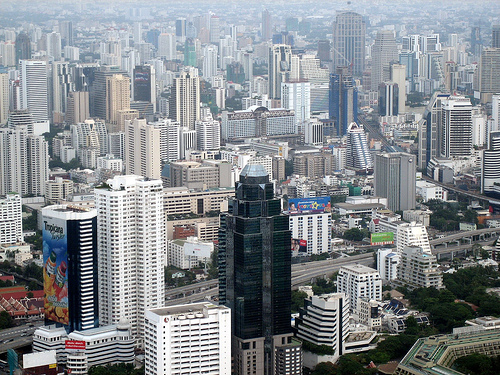
Implement these 7 things into your life to help you survive in the Concrete Jungle
5. Move around as much as possible
Many of my clients are expats with desk jobs that require minimal physical exertion. Bangkok expats commonly sit down at a chair all day, get driven home by their driver and then sit down to watch TV or eat. All that time sat down and not moving is going to destroy your body and health. Some high intensity exercise helps, but it should also be complimented with as much movement in everyday life as possible. Take the stairs, walk around the office, stand up and roll your shoulders back and stretch out, walk that skytrain stop, jump out of your chair and do some jumping jacks (probably best if you work from home). In summary, our bodies were designed to move, so try and be conscious of moving them as much as possible.
6. If you’re going to a function/event/birthday, then eat perfectly in the daytime
This point is so important I think it’s deserving of its own article. Many people I speak to here talk about how hard it is to lose weight and eat well when they have so many functions, meetings and events to attend. All with obligatory drinks with clients, large buffets etc. The solution is simple, exercise some balance by eating perfectly (lots of vegetables, a little fruit, perhaps some lean meat) and sparingly in the daytime leading up to the event. This will produce a large calorie deficit which you can happily fill by eating and drinking what you want in the evening, within reason. More on this soon.
7. Read BangkokFitness.com once a week and set some goals!
OK, I admit it – reading my blog isn’t going to magically transform you into a warrior or a Victoria Secret model ; ) … but it might provide some inspiration to improve yourself or find out about a race or event that you can aim for (article on goal setting coming soon!)
Develop and progress by implementing these 7 things into your life today.
Good luck!
 Bangkok Personal Trainer, Health, Fitness, Diet, Bootcamp, Football and Sport